

Navigating the global landscape of international education requires a clear understanding of the regulatory hurdles you will face before stepping onto a campus. Because international policies shift annually, staying informed about the Student Visa Requirements by Country (Updated for 2026) is the most critical step in your application process.
Whether you are aiming for a degree in North America or a vocational certificate in Europe, your eligibility depends on meeting specific financial, linguistic, and academic standards set by immigration authorities. This article provides the essential data you need to prepare your documentation and ensure your transition to a foreign university is as smooth as possible.
The core necessity for any student visa application in 2026 is proof of financial sufficiency, which varies dramatically depending on the destination. For example, the United States typically requires evidence that you can cover at least one year of tuition and living expenses, often exceeding $45,000 to $60,000 for top-tier institutions. In contrast, countries like Germany require students to deposit funds into a “blocked account,” which is set at €11,904 for the 2026 academic year.
You must also provide a valid passport, an official letter of acceptance from a recognized institution, and proof of health insurance coverage. Failure to produce these documents in their original, verified form remains the most common reason for visa denials across all major study destinations.
Financial Evidence and Proof of Funds
Every immigration department needs to know that you will not become a public burden during your studies. This is why financial documentation is the most scrutinized portion of your application. You are expected to provide bank statements, scholarship letters, or sponsorship affidavits that clearly demonstrate the liquidity of your assets.
In the United Kingdom, for instance, you must demonstrate that you have enough money to pay for your course fees for one academic year plus a monthly living allowance. This allowance is set at £1,334 per month for those studying in London and £1,023 per month for those studying outside London.
You must hold these funds in your bank account for at least 28 consecutive days before you submit your visa application. If your balance drops below the required amount for even a single day during that period, your application will likely be rejected.
Other countries offer more flexibility but still demand transparency. Canada uses the Guaranteed Investment Certificate (GIC) system, where students are encouraged to invest a specific amount, often around $20,635 CAD, to prove they can sustain their living costs.
This money is released to the student in installments once they arrive, ensuring they have a baseline of support throughout their first year. Always check if your destination country accepts digital bank statements or if they require stamped, original paper copies.
Language Proficiency Standards
Language requirements are the primary gatekeepers for non-native speakers applying to English-speaking countries. Most universities and immigration offices mandate a standardized test score to ensure you can function in an academic environment. The International English Language Testing System (IELTS) and the Test of English as a Foreign Language (TOEFL) remain the global gold standards for this proof.
For undergraduate programs in the U.S. or the UK, a minimum IELTS score of 6.0 to 6.5 is generally expected, though elite programs may demand 7.0 or higher. In 2026, many countries are also accepting digital, at-home versions of these tests, provided they are administered by recognized testing bodies.
However, some embassies still insist on in-person testing to prevent fraud. It is vital to verify whether your specific university requires a higher score than the visa office itself.
If you are planning to study in a non-English speaking country, such as France or Spain, you may need to prove proficiency in the local language if your program is not taught entirely in English. You might be asked to provide a diploma from a local language institute or pass an embassy-conducted interview. Do not underestimate this requirement, as even programs taught in English often require a basic level of local language fluency to help you navigate daily life and legal responsibilities.
Health Insurance and Medical Requirements
Your health status is a matter of national security and public welfare for the country you intend to enter. Almost all nations now require proof of comprehensive health insurance before they will grant a student visa. This insurance must cover emergency medical care, hospitalization, and sometimes even medical repatriation.
In Australia, the Overseas Student Health Cover (OSHC) is a mandatory requirement for the duration of your visa. You must pay this premium upfront, and it typically costs between $600 and $800 AUD per year for a single student. This coverage ensures that you have access to the public health system, which is otherwise reserved for citizens and permanent residents.
Some countries, particularly those in the Schengen Area, require you to purchase insurance that meets specific minimum coverage limits, often €30,000. This policy must be valid across all member states, not just the country where your university is located.
You should also check if you need to undergo a medical exam or a chest X-ray to screen for tuberculosis. These requirements are common for students arriving from countries classified as having a high incidence of certain infectious diseases.
Institutional Enrollment and CAS/I-20 Letters
You cannot apply for a student visa without official confirmation that you have been accepted into a legitimate academic program. This document acts as the cornerstone of your visa application. In the United States, this is known as the Form I-20, while in the UK, it is the Confirmation of Acceptance for Studies (CAS).
These documents contain a unique identification number that links your visa application directly to the university’s records. Without this number, the immigration officer cannot verify your enrollment status.
If you change your program or defer your start date, you must obtain an updated document from the university before proceeding with your visa application. Any discrepancy between your visa application and your enrollment letter will trigger an automatic review that can delay your travel plans by months.
It is essential to keep the original copy of this document with you when you travel. You will be required to present it at the port of entry to the immigration officer.
Do not pack this in your checked luggage, as you will need it before you even clear customs. Many students also find it helpful to carry a digital backup on a secure cloud drive, though the physical document remains the only version accepted by border authorities.
The Role of Biometrics and Background Checks
Biometric data collection has become a standard procedure for visa applicants worldwide. This typically involves submitting your fingerprints and a digital photograph at a designated visa application center. This process is designed to prevent identity fraud and ensure that the person entering the country is the same person who applied for the visa.
In 2026, the use of facial recognition technology at borders is becoming more prevalent, making the quality of your biometric submission at the application stage more important than ever. You should avoid wearing glasses or head coverings that obscure your features during your appointment. If your fingerprints are not clear, you may be asked to return for a second appointment, which can add weeks to your processing time.
Background checks are the final hurdle in the security process. You will likely be asked to provide a police clearance certificate from your home country or any country where you have lived for more than six months in the last decade.
This document confirms that you do not have a criminal record that would pose a threat to the host country. If you have any past legal issues, be prepared to provide detailed explanations and court documents, as full disclosure is always better than hiding information that will eventually surface during a background check.
Comparing Visa Costs and Processing Times
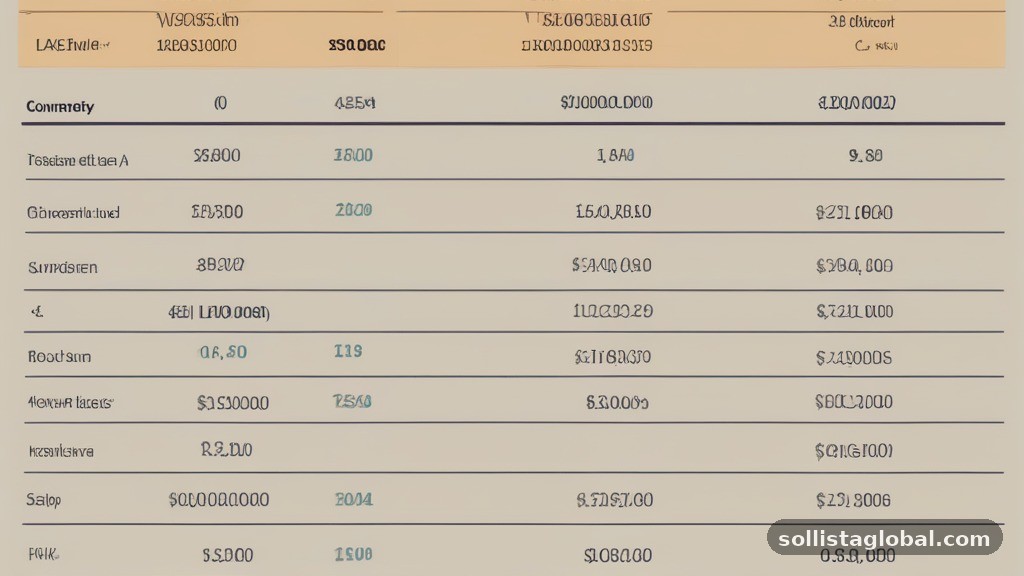
The cost of applying for a student visa is a significant factor in your overall budget. These fees are non-refundable, regardless of whether your application is approved or denied. The table below provides a rough comparison of standard visa application fees for major study destinations as of 2026.
| Country | Estimated Visa Fee (USD) | Average Processing Time |
|---|---|---|
| United States | $185 (plus SEVIS fee) | 4–8 weeks |
| United Kingdom | $630 (approx.) | 3 weeks |
| Canada | $175 (approx.) | 6–12 weeks |
| Australia | $480 (approx.) | 2–6 weeks |
| Germany | $85 (approx.) | 4–12 weeks |
Processing times fluctuate based on the volume of applications and the time of year. Summer months are notoriously busy, as thousands of students apply simultaneously for the fall intake.
You should aim to submit your application at least three to four months before your program start date. If you are applying from a country with limited consular services, you may need to travel to a neighboring country for your visa interview, which will add to your total expenses and planning time.
Impact of Recent Policy Changes
Immigration policies are rarely static, and 2026 has seen several shifts in how countries handle international students. Many nations are tightening rules regarding post-study work rights to manage population growth and housing demand. For example, some countries have introduced stricter requirements for dependents, preventing international students from bringing spouses or children unless they are enrolled in specific postgraduate research programs.
You should also be aware of the “Genuine Student” tests that are replacing older, more formal assessment methods in places like Australia. This shift means that visa officers are looking more closely at your intent, your academic background, and how the degree you are pursuing aligns with your career goals. If your application looks like a disguised attempt to gain permanent residency rather than an attempt to study, you will face higher scrutiny.
Always check the official government portal for the country you are targeting to get the most accurate and current information. Third-party websites often contain outdated advice that can lead to costly mistakes. Relying on official government resources ensures that you are aware of any sudden changes to rules regarding work hours, visa extensions, or mandatory health screenings.
Employment Rights During and After Studies
Most students want to work part-time to help cover their living expenses, but the rules regarding student employment are strict. In the United Kingdom, most students are limited to 20 hours of work per week during term time. Working more than this is a violation of your visa conditions and can lead to immediate deportation and a ban on future re-entry.
In Canada, the rules have become more flexible, allowing students to work off-campus for more hours during scheduled breaks, but you must remain enrolled in a full-time program. In the United States, F-1 visa holders are restricted to on-campus employment for the first year of their studies. Off-campus work is only permitted through programs like Curricular Practical Training (CPT) or Optional Practical Training (OPT), which must be directly related to your field of study.
Post-study work visas are another major consideration. Many countries offer a “graduate route” or a “post-study work permit” that allows you to stay for one to three years after graduation to gain professional experience.
However, these permits are not automatic. You must apply for them before your student visa expires, and you must maintain a legal status throughout the transition.
Common Reasons for Visa Denials
Understanding why applications are rejected can help you avoid making the same mistakes. The most common reason for denial is “insufficient proof of ties to the home country.”
Immigration officers want to be convinced that you intend to return home after your studies. If you cannot demonstrate strong professional or family ties to your home country, they may fear you intend to stay permanently.
Another frequent issue is incomplete or inconsistent documentation. If your bank statement shows a large, unexplained deposit just days before your application, the officer may suspect that the money was borrowed solely to satisfy the financial requirement. Always be prepared to explain the source of your funds, such as savings, educational loans, or parental support.
Finally, poor performance in an interview can sink an application. If you are applying for a master’s degree but cannot explain why you chose that specific university or how the degree fits into your career trajectory, the interviewer will doubt your sincerity. Practice your responses, be honest, and ensure that your story matches the documents you have submitted.
Essential Checklist for Your Application
To keep your application organized, you should maintain a checklist of all required items. It is easy to miss a small document like a passport photo that doesn’t meet the exact size specifications. Below are the standard documents you will need to prepare for any international student visa application.
- Valid passport with at least six months of remaining validity.
- Official letter of acceptance (I-20, CAS, or equivalent).
- Proof of payment for the visa application fee and any required SEVIS fees.
- Bank statements or financial sponsorship letters covering at least one year of expenses.
- Standardized test scores (IELTS, TOEFL, PTE, or local equivalent).
- Academic transcripts and certificates from your previous education.
- Health insurance policy document meeting the host country’s requirements.
- Evidence of ties to your home country, such as property deeds or job offers.
- Passport-sized photographs taken within the last six months.
Organizing these documents in a folder, both physically and digitally, will make the application process much less stressful. Create a timeline that marks your university application deadline, your visa appointment date, and your expected departure date. By giving yourself extra time for each step, you can handle unexpected delays, such as missing documents or administrative processing backlogs, without jeopardizing your enrollment.
Frequently Asked Questions
Which country is considered the easiest for obtaining a student visa in 2026?
While “easy” is subjective, countries like Germany and Canada are often cited for their transparent, point-based, or documented financial systems. However, each country has specific requirements that may be easier for some students based on their nationality and educational background.
Can I bring my family with me on a student visa?
Many countries allow you to bring a spouse or dependent children, but you must prove you have additional financial resources to support them. Some nations have recently tightened these rules, so check the specific policy for your destination.
What happens if my visa application is delayed?
If your visa is not approved before your course starts, contact your university’s international student office immediately. They may be able to issue a letter of support or advise you on deferring your enrollment to the next intake.
Do I need an interview for every student visa?
Not every country requires an in-person interview. Some countries rely entirely on the documents you submit, while others, like the United States, almost always require an interview at the embassy or consulate.
What is the most common mistake applicants make?
The most common mistake is failing to provide clear, verifiable evidence of financial support or neglecting to demonstrate a genuine intent to return home after graduation. Providing inconsistent information between your university application and your visa application is also a major red flag.
Ensuring Your Future Success
Preparing for your international education is a significant undertaking that requires attention to detail and proactive planning. By understanding the Student Visa Requirements by Country (Updated for 2026), you place yourself in a much stronger position to receive an approval and begin your academic journey. Remember that your visa is a privilege, and maintaining your legal status once you arrive is just as important as the application process itself.
Stay in contact with your university’s international office, keep your financial and health documents updated, and always prioritize your studies to ensure you remain compliant with your visa conditions. With the right preparation, your international experience will be a defining milestone in your professional and personal life. Reach out to your local embassy or your chosen university if you have specific questions about your unique situation.