


Understanding business registration costs around the world compared provides vital clarity for entrepreneurs deciding where to establish their next venture. While some nations prioritize low-barrier entry to stimulate economic growth, others impose significant fees and complex bureaucratic requirements that can impact your initial capital reserves.
By analyzing the financial landscape of incorporation across different continents, you can better align your startup strategy with your available budget. This overview highlights the diverse realities of global business formation, helping you identify which jurisdictions offer the most efficient path for your specific operational goals and financial constraints.
The reality of business registration costs around the world compared is that expenses vary wildly based on local regulations, required capital, and mandatory professional services. In many developed economies, you might expect to pay between $500 and $2,500 in government filing fees and initial compliance costs.
Conversely, some emerging markets offer streamlined, digital-first registration processes for under $100. It is critical to distinguish between simple filing fees and the hidden costs of mandatory local agents, physical office requirements, and notarization fees that often inflate the actual price of starting a company.
Understanding the Price Variance

The primary reason for the wide spectrum in registration costs is the difference between administrative transparency and regulatory complexity. Countries that have digitized their entire business registry often charge nominal fees to cover basic processing costs. Nations that still rely on manual verification, physical stamps, and in-person legal review often pass those higher overhead costs directly to the business owner.
Regulatory requirements like minimum capital deposits also function as a form of “hidden” registration cost. Even if the government fee is only $50, being required to deposit $10,000 in a local bank account to finalize registration creates a significant barrier. Investors and founders must evaluate the total cost of entry rather than just the filing receipt amount.
Registration Expenses in North America
In the United States, registration costs are highly decentralized because they are managed at the state level. A Delaware LLC might cost $90 to file, while a California registration could exceed $800 when factoring in the initial franchise tax. Most states fall somewhere in the middle, typically ranging from $100 to $300 for basic formation documents.
Canada follows a similar federal-provincial split, with federal incorporation costing roughly $200 CAD online. However, provinces often add their own registration fees, and you may need to pay for a NUANS name search report. These combined costs usually land between $300 and $500 CAD for a standard small business setup.
European Incorporation Realities
European business registration often involves higher fixed costs due to the necessity of involving notaries or legal professionals. In Germany, the GmbH (limited liability company) requires a notarized deed, which can push initial formation costs well above $1,000 including court and registry fees. Many entrepreneurs choose the “UG” structure to bypass high capital requirements, though professional fees remain significant.
The United Kingdom remains one of the most cost-effective regions in Europe for business formation. You can register a private limited company online through Companies House for as little as £12. While this is an incredibly low government fee, you must also consider the cost of registered office services and potential accounting setup fees that follow immediately after.
Asian Markets and Digital Hubs
Singapore is frequently cited as a premier destination for business registration due to its efficiency and transparency. The registration fee is $300 SGD, and the process is almost entirely digital, allowing for rapid turnaround. Singapore’s appeal lies in the low administrative friction, even if the government fee is slightly higher than in the UK.
China presents a different model where registration costs are often tied to the scale of the intended investment. While the base filing fees might be low, the administrative burden of setting up a Wholly Foreign-Owned Enterprise (WFOE) often requires hiring local consultants. These professional service fees can range from $2,000 to $5,000 for initial setup, making it one of the more expensive environments for small-scale startups.
The Cost of Doing Business in Latin America
Registration in Latin American countries is often described as a multi-step process that can be time-consuming and costly. In countries like Brazil, the complexity of the tax system means that business registration is rarely a one-time fee. Entrepreneurs often pay for specialized legal support to navigate the “RedeSim” system, with total setup costs often exceeding $500 to $1,000 once all municipal and state licenses are secured.
Mexico has made strides with the SAS (Simplified Joint Stock Company) model, which allows for free online incorporation. This policy was designed to bring informal businesses into the formal economy. However, once a business grows, the transition to a traditional S.A. de C.V. structure involves mandatory notary fees that can vary based on the capital structure and the specific state of incorporation.
Comparative Data Table
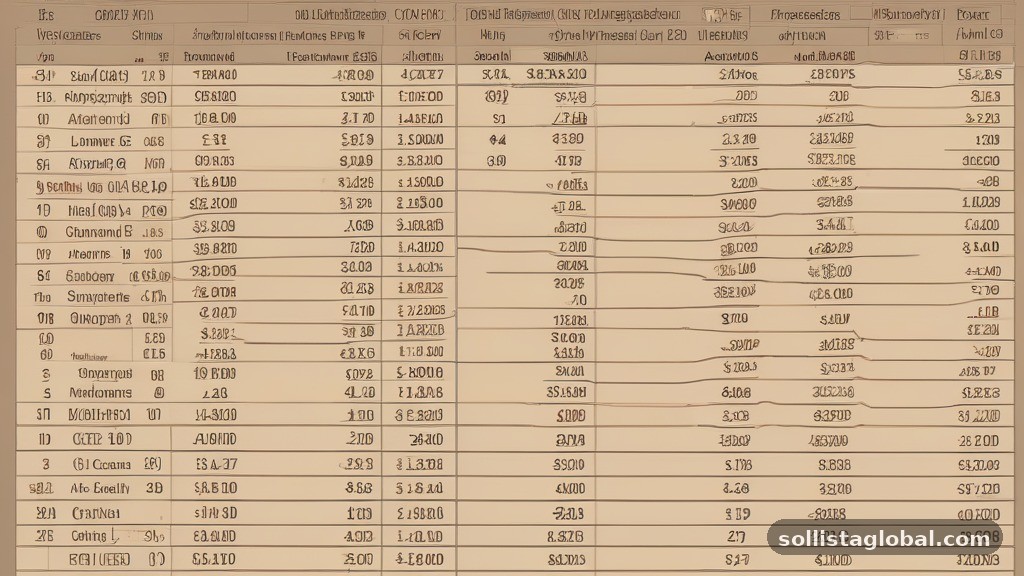
The following table offers a snapshot of approximate government filing fees for a standard limited liability structure in selected global jurisdictions. Please note that these figures exclude professional service fees, legal consultations, and mandatory minimum capital deposits.
| Country | Estimated Filing Fee (USD) | Primary Registration Method |
|---|---|---|
| United Kingdom | $15 | Online (Companies House) |
| Singapore | $225 | Online (ACRA) |
| United States (Delaware) | $90 | Online/Mail |
| Germany | $750+ | Notarized/Court |
| Mexico (SAS) | $0 | Online |
| Canada (Federal) | $150 | Online |
Hidden Costs Beyond the Filing Fee
Many entrepreneurs fail to account for the “maintenance” costs that follow registration. You might pay a low initial fee to register, but then face annual compliance costs that vary by region. For instance, in the United States, many states require an annual report fee that can be as low as $20 or as high as $500.
You must also consider the cost of a registered agent or a physical office address. Many jurisdictions require a local address to accept legal service of process.
If you do not have a physical presence, hiring a firm to provide this service can cost $100 to $300 per year. These recurring expenses are just as important as the initial registration costs when evaluating long-term viability.
The Role of Professional Services
Using a law firm or a corporate services provider adds a layer of security and speed to the registration process. While you could technically file the paperwork yourself in many countries, professionals ensure that your articles of incorporation are drafted to prevent future disputes. These services typically charge a flat fee or an hourly rate for their expertise.
In jurisdictions with complex legal requirements, such as the UAE or parts of Southeast Asia, using a local partner or agent is often mandatory. This adds a layer of cost that effectively functions as a “tax” on entry. For a deeper look at global business standards, you can review the World Bank’s development data regarding business regulations and economic environments.
Factors That Influence Your Final Bill
Your choice of business structure—whether it is a sole proprietorship, a limited liability company, or a corporation—directly dictates your registration costs. Corporations generally require more complex filings and higher fees than simple LLCs. You should also consider the complexity of your business activities, as regulated industries often require additional licenses.
Licensing fees for specific industries can dwarf the cost of business registration itself. For example, registering a fintech company or a healthcare startup often requires specific permits that can cost thousands of dollars. Always research the industry-specific regulatory costs in your target jurisdiction before finalizing your budget.
Checklist for Estimating Total Costs
Before committing to a jurisdiction, ensure you have accounted for all potential expenses. A thorough budget should include the following items to avoid mid-process surprises:
- Government filing fees and state-level taxes.
- Mandatory professional service fees for local agents or notaries.
- Minimum capital requirements that must be deposited into a local bank.
- Annual compliance and reporting fees for the first two years.
- Costs for specialized industry permits or environmental licenses.
- Fees for local bank account opening and initial compliance documentation.
Frequently Asked Questions
Which country is the cheapest for business registration?
The United Kingdom and certain online-first models in Mexico or Estonia are among the cheapest to register a company. In the UK, you can set up a company for roughly $15, while some digital jurisdictions offer near-zero cost registration. However, you must always look at the recurring annual maintenance fees, as these can be higher than the initial setup cost.
Does the USA have high business registration costs?
The USA is moderate, but costs are highly fragmented. While some states have low filing fees under $100, others like California or Massachusetts have higher initial taxes or annual reporting fees. You are not just paying for the filing; you are paying for the legal framework and state-level compliance that supports your business.
Is it better to register where it is cheapest?
Not necessarily, as the cheapest location for registration might not be the best for your tax residency or market access. You should choose a location based on where your customers are, where you hold assets, and the stability of the legal system. Saving $500 on registration is irrelevant if you end up paying significantly more in taxes or legal fees later.
Do I always need a lawyer to register a business?
In many countries, you can register a business entirely on your own through government portals. However, if your business has multiple founders, complex ownership structures, or requires specific intellectual property protections, a lawyer is recommended. Professional guidance helps ensure your operating agreement is drafted to protect your long-term interests.
What happens if I forget to pay annual registration fees?
Failing to pay annual fees usually leads to the administrative dissolution of your company. This means you lose your limited liability protection and the right to use your business name. In some jurisdictions, you may also face significant late penalties and interest charges that make it difficult to reinstate the entity.
Conclusion
Evaluating business registration costs around the world compared reveals that there is no single “correct” price for starting a company. Success depends on balancing the upfront cost of incorporation against the long-term benefits of the jurisdiction’s legal and tax environment. While low fees are attractive for early-stage startups, the total cost of ownership—including annual compliance and regulatory maintenance—is the true metric of affordability.
Before you proceed, define your business needs and research the hidden requirements of your chosen location. Whether you prioritize speed, low costs, or global prestige, careful planning ensures your business foundation is solid. If you have specific questions about your chosen jurisdiction, consider consulting with a local professional to confirm the latest fee schedules and compliance mandates.